Molecular Notes
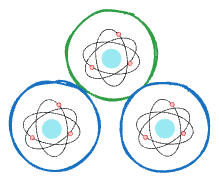
A molecular note contains multiple related topics or ideas within a single document. It contrasts with an atomic note, which strictly focuses on a single concept.
- Use atomic notes when you need maximum flexibility and precise, granular linking.
- Use molecular notes when ideas naturally belong together and separating them would weaken their collective context.
The concept borrows directly from chemistry:
- Atoms are the smallest functional units.
- Molecules are combinations of atoms that form more complex structures.
In a knowledge base, atomic notes represent minimal, single-topic concepts, while molecular notes serve as richer, multi-topic clusters. Just as single atoms rarely exist in isolation in nature, notes often carry more meaning when grouped into coherent clusters.
Why Use Molecular Notes?
- Contextual Richness: Keeps closely related ideas together in a single place.
- Practicality: Reduces friction and fragmentation when concepts are deeply interdependent.
- Natural Structure: Mirrors how knowledge is applied in real-world scenarios — in contextual blocks rather than isolated snippets.
- Base Unit: Allows a cohesive topic cluster to serve as a starting point, rather than forcing you to assemble dozens of atomic links from scratch.
In Real Life…
A common pitfall in digital note-taking is over-fragmentation — creating thousands of micro-atomic notes. When notes are too broken down, understanding a topic requires constantly jumping across dozens of links just to reconstruct a single coherent thought.
Whenever multiple atomic pieces naturally belong together and are always consumed as a unit, combine them into a molecular note. It serves as a direct safeguard against premature optimization and excessive atomization.
See also: Atomic notes | Splitting Notes