Current Events — Starter Kit
Over time, I realized the problem wasn't the content — it was the rhythm. News moves too fast, overlaps, and disappears. When you try to force this flow into rigid categories — by year, country, or project — the system inevitably breaks.
That’s how the Current Events process was born. It is not a formal method, but a way to regain clarity: capture events briefly, revisit them in cycles, and let patterns emerge naturally without forcing information into boxes.
The method works because it follows the natural flow of events. It doesn’t try to impose order; it creates space for order to appear. You capture an event when it happens, then review it in cycles:
- Weekly: To see what changed (Current Events - Weekly Review - 2026-W06).
- Monthly: To see what moved (Current Events - Monthly Review - 2026-02).
- Quarterly: To identify emerging trends (Current Events - Quarterly Review - 2026-Q1).
- Annually: To understand the big picture of what truly happened (Current Events - Yearly Review - 2026).
Each event becomes a short note focused on recording just enough to remember what happened and why it matters. The structure remains consistent: summary, source, key details, context, impact, and analysis — exactly what you find in the Full Template. This repetition creates comparability, allowing you to spot patterns that used to go unnoticed.
These reviews are the heart of the process. The weekly review separates noise from signal, the monthly shows broader movements, and the quarterly reveals trends. Each layer adds depth without requiring you to reorganize the past. It amplifies your ability to see the delicate thread of life, especially within a corporate context.
For current events, we don’t use folders for themes; we use links. Simple, direct, and without hierarchy, an event can connect to a country (Country name), a theme (Theme), a person (Person), or an ongoing story. These connections create a living network where structure emerges naturally through the backlinks panel.
The process adapts to your rhythm and sector—be it technology (Technology), security (Security), or financial markets (Financial Sector). Over time, you’re no longer just keeping up with the world; you’re keeping up with what matters to you.
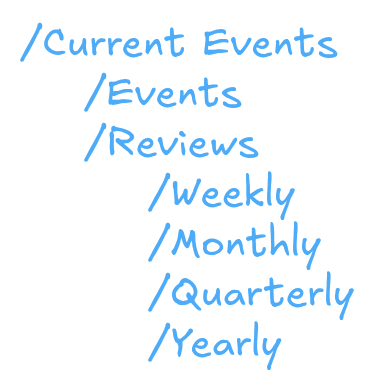
Directory structure
The structure is minimal. Folders are just containers; the real organization happens through links. I opted for an independent set of folders for events to maintain a mental segregation between work and personal life. This allows me to disconnect from work-related tracking during personal time.
Essential templates
Below are the templates for each part of the process. These cover the body of the note; metadata can follow the Current Events/Events/Template - Generic.
Event
# Current Event – [[<% tp.date.now("YYYY-MM-DD") %>]]

## Summary
What happened in a few lines. Straight facts.

## Source
Where the information came from (include links if available).

## Key Details
- Essential points.
- Numbers, dates, actors.
- Decisions or relevant changes.

## Context
What led to the event. Previous situation, trends, or external pressures.

## Impact
Immediate consequences. Effects on sectors, people, processes, or markets.

## Analysis
Your interpretation. Relations with other events, risks, opportunities, or hypotheses.

## Contrarian View
What if the consensus is wrong? What is the non-obvious risk here?

## Links
Connections to themes, countries, years, or stories.
Weekly review
# Weekly Review – Current Events – [[<% tp.date.now("gggg-[W]ww") %>]]

## Main Events
Most relevant events of the week.

## What Changed
Perceived changes and shifts.

## Sector Impact
Possible impacts on your specific sector.

## Internal Impact
Internal effects and consequences.

## Points to Monitor
What to watch in the coming days.

## Fire Drills vs. Trends
Which events require immediate resources vs. long-term attention?

## Links
Relevant connections.
Monthly review
# Monthly Review – Current Events – [[<% tp.date.now("YYYY-MM") %>]]

## Executive Summary
2–3 sentences: “What is the threat, what is our exposure, and what are we doing?”

## Structural Movements
Broad movements observed during the month.

## Consolidated Risks
Risks that grew or emerged.

## Opportunities
Identified opportunities.

## Internal Implications
Internal impacts and requirements.

## Board Brief
Summary prepared for status reports (copy & paste ready).

## Links
Connections to notes from the period.
Quarterly review
# Quarterly Current Events – [[<% tp.date.now("YYYY-[Q]Q") %>]]

## Executive Summary
Strategic overview of threats, exposure, and actions.

## Consolidated Trends
Trends confirmed over the quarter.

## Sector Shifts
Major changes in the sector landscape.

## Risk Evolution
How risks have evolved over time.

## Strategic Implications
Long-term effects on strategy.

## Priorities for Next Quarter
Key focus areas for the upcoming months.

## Financial & Budgetary Impact
Does the evolution of these risks require a shift in CAPEX/OPEX?

## Links
Relevant connections.
Annual review
# Yearly Current Events – [[<% tp.date.now("YYYY") %>]]

## Structural Overview
Structural movements that defined the year.

## Sector Evolution
How the sector changed over twelve months.

## Risk Landscape
The overall evolution of the risk environment.

## Opportunities and Lessons
Lessons learned and future opportunities.

## Strategic Direction
Possible directions for the coming year.

## Links
Connections to syntheses and planning.
Current Full Template for Events Capture
While these templates provide the structure, The Executive Pulse series provides the strategy.
If you are a leader looking to transform these daily captures into boardroom focus and budgetary power, follow the series here: The Executive Pulse Series.
Workflow summary
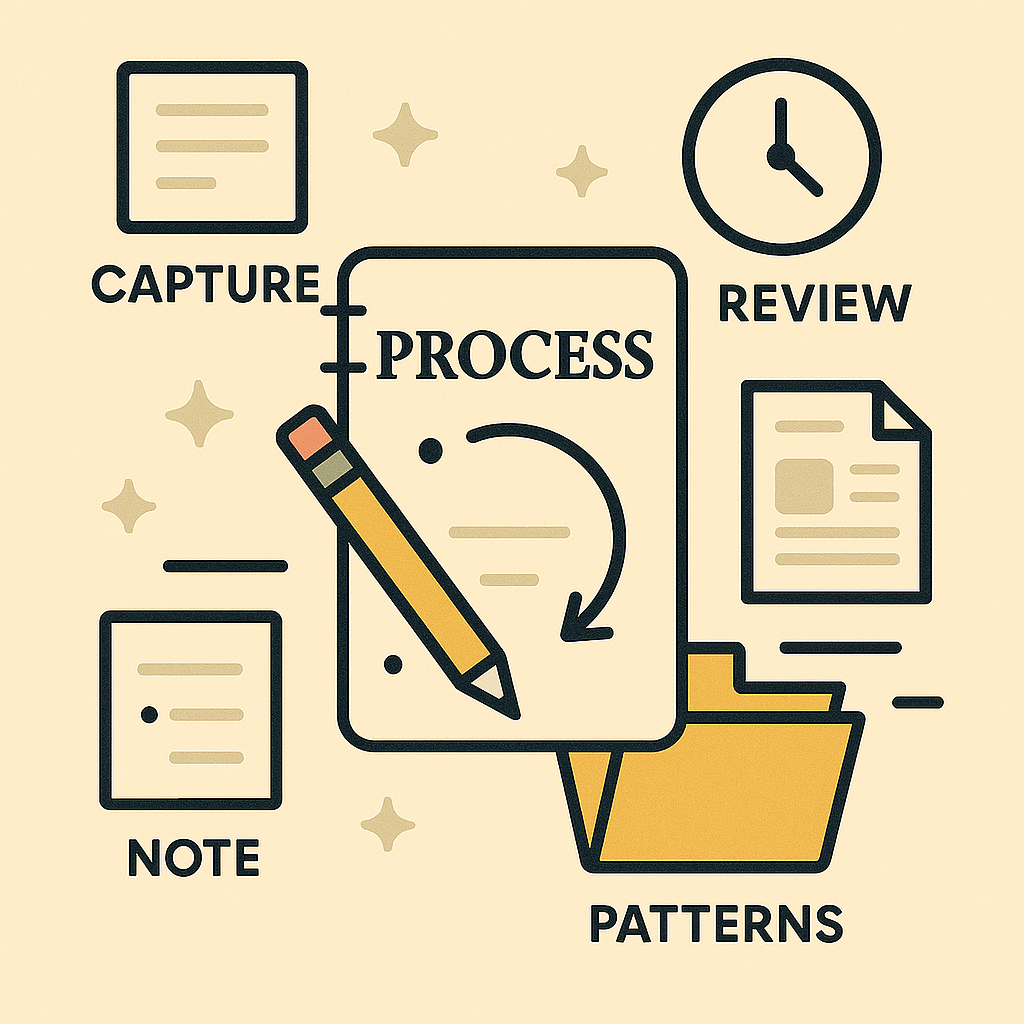
Daily capture
Record events consistently using the standard structure. Write little, but stay consistent.
Weekly review
Review daily notes to separate noise from signal. Connect related items and remove what is no longer relevant.
Monthly review
Observe broader themes and structural movements gaining or losing strength.
Quarterly review
Recognize long-term trends and connect ongoing stories.
Annual review
Consolidate the year's view to understand what truly happened and inform future planning.